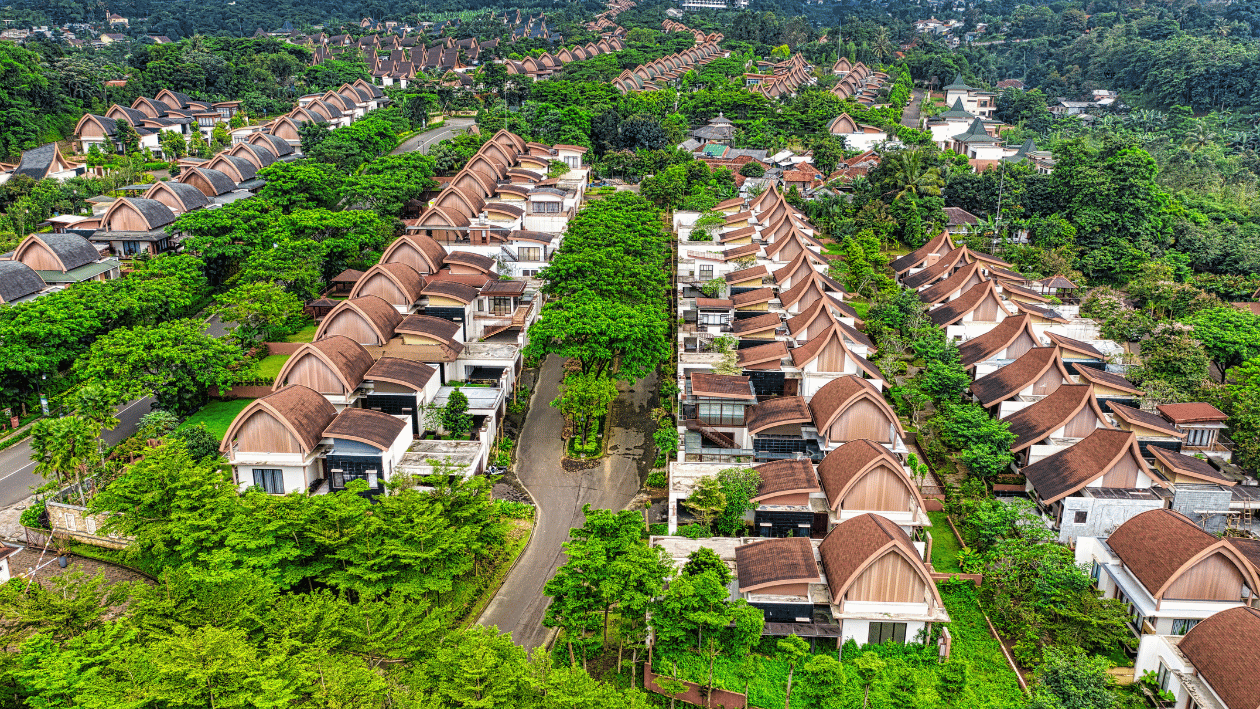
HGB and SHGB management is a critical part of property, industrial estate, infrastructure, and commercial development in Indonesia. For developers and project owners, land rights must be legally clear, properly documented, and maintained throughout the project lifecycle. Weak land administration can create delays in financing, construction, asset transfers, and future expansion.
A structured approach to HGB and SHGB helps project owners secure long-term land use rights, reduce legal uncertainty, and maintain consistency between land records, development plans, licensing documents, and operational requirements. This guide explains the main stages, risks, and practical considerations for managing HGB and SHGB in property and industrial projects.
Understanding HGB and SHGB in Development Projects
Hak Guna Bangunan, commonly known as HGB, is a land right that allows its holder to construct and own buildings on land that is not owned under freehold title. SHGB refers to the certificate that records and proves that right. In practice, both terms are often used together when discussing land control for companies, developers, industrial estates, power projects, commercial buildings, and other large-scale developments.
1. Why HGB and SHGB Matter
HGB and SHGB provide legal certainty over the land used for development. They support construction, financing, leasing, asset management, corporate transactions, and long-term operational planning. Clear certification also helps project owners demonstrate control over the project site to lenders, investors, business partners, and government authorities.
2. Common HGB and SHGB Management Activities
Depending on the project, HGB and SHGB management may include new applications, extensions, renewals, parcel splitting, certificate mergers, data maintenance, and adjustments related to site development. Each activity requires accurate supporting documents, land data, technical references, and coordination with the relevant land authorities.
Effective HGB and SHGB management protects the legal foundation of a development project and keeps land administration aligned with business and construction needs.
PT Global Solusindo Gemilang
HGB and SHGB should not be handled as isolated administrative matters. They are closely connected to land acquisition, spatial conformity, construction permits, environmental requirements, and business licensing. Project owners should therefore coordinate land certification with the broader permitting roadmap.
The Indonesian OSS system supports business licensing processes, but land rights and land certification still require separate legal, technical, and administrative coordination. A consistent document strategy helps avoid mismatches between land records and licensing submissions.
Key Stages in HGB and SHGB Management
A practical HGB and SHGB management process should be planned from the beginning of the project. The main stages usually include the following:
Land and document review. The process begins with a review of certificates, ownership history, land maps, tax records, acquisition documents, and supporting legal files. Any discrepancy in names, boundaries, parcel size, or transaction history should be identified early.
Technical and boundary verification. Accurate land measurement and boundary confirmation are essential, especially when certificates will be split, merged, or renewed. Technical data must be consistent with the actual site condition and project master plan.
New HGB application. For newly acquired or restructured land, the project owner may need to apply for a new HGB. This requires a clear legal basis, complete application documents, company records, technical references, and coordination with relevant government institutions.
Extension and renewal. HGB has a validity period, so project owners should monitor expiry dates and prepare extension or renewal applications in advance. Late preparation can create operational, financing, or transaction risks.
Splitting and merging certificates. Large projects often require certificates to be divided or consolidated to match development phases, land use plans, infrastructure corridors, or future commercial arrangements. This process should be aligned with the site plan and asset strategy.
Data maintenance and post-certification control. After certificates are issued, companies should maintain updated records, track changes, store supporting files, and monitor obligations. Good document control reduces the risk of future disputes or administrative errors.
Common risks include incomplete acquisition documents, inconsistencies between certificates and field conditions, unresolved encumbrances, expired land rights, boundary disputes, and delays in technical recommendations. These risks can be reduced through early due diligence, centralized document management, clear responsibility assignment, and regular status monitoring.
PT Global Solusindo Gemilang provides integrated support for HGB and SHGB applications, extensions, renewals, splitting, mergers, data maintenance, land acquisition, licensing, and regulatory compliance. Learn more about our services or contact our team to discuss your project requirements.
For property and industrial projects, well-managed HGB and SHGB are not merely legal documents. They are strategic assets that support construction readiness, financing, operational continuity, and long-term development value.